October 02, 2026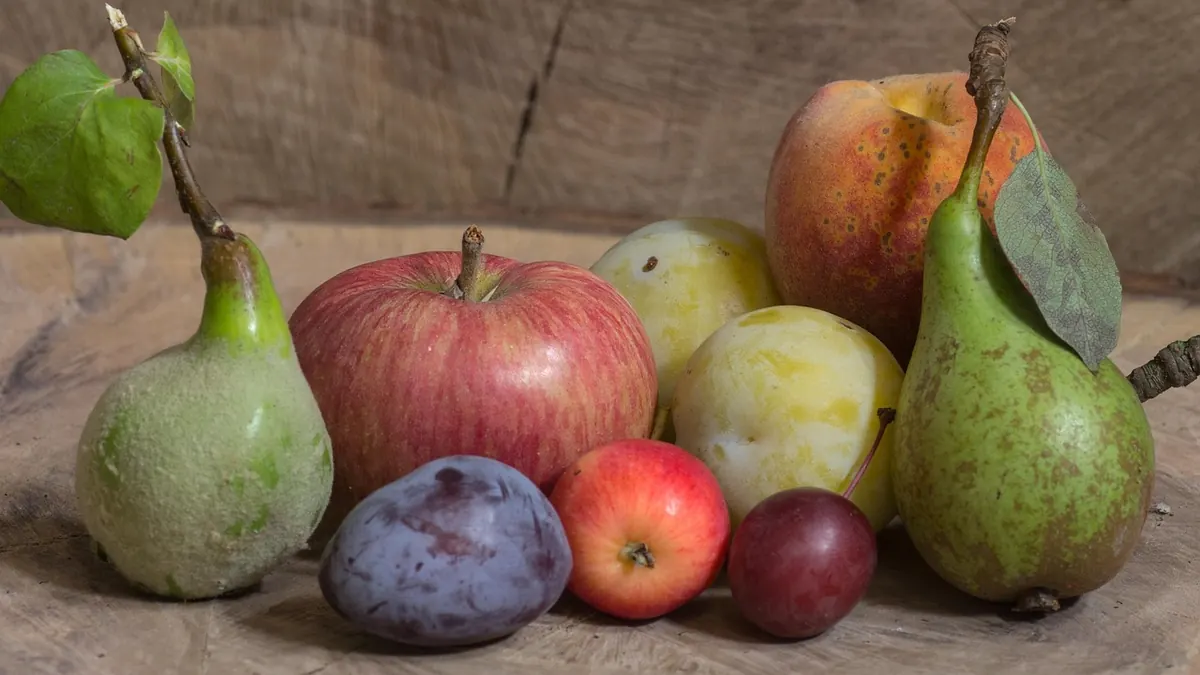
Buy a pear and it will sit on the worktop for a week looking exactly the same, then collapse into mush the moment your back is turned. Pears do not ripen like apples or bananas. They soften from the inside out, which means the core can be turning to pulp while the skin still feels like a cricket ball. Get the timing right, though, and a pear is one of the best things in the fruit bowl — sweet, perfumed and dripping. The trick is knowing that Conference, Comice and Williams each play by slightly different rules.
Why pears refuse to follow the usual rules
Pears are picked hard for a reason. Left on the tree too long, they turn grainy and bland at the centre, so growers pick them mature but firm and let them finish off the tree. From that point, ripening moves outwards from the core: the middle softens first, then the flesh under the skin. The skin is usually the last thing to give any clue.
There is a second quirk. Some varieties will not ripen properly until they have had a spell of cold. Home-grown Conference, Comice and winter pears often sit stubbornly hard for a fortnight, then soften all at once when the weather turns. If pears you grew yourself are refusing to budge, a few days in the fridge — not the freezer, and not longer than a week or so — often gets them going. Fruit from a shop has usually had that cold spell already, which is why it behaves better.
The neck test: the only test that matters
Forget squeezing the middle. The place to check is the neck — the narrow section just below the stalk. Cup the pear in one hand and press the neck gently with your thumb.
- Hard, no give: not ready. Leave it alone.
- Gives very slightly, like the pad of your thumb: ready. This is the moment.
- Squashy, and the wide middle yields too: past its best. The flesh will be soft and possibly mealy.
A firm middle on a pear with a yielding neck is exactly what you want: tender near the stalk, still with structure in the body. Press lightly, too, because pears bruise under a hard thumb and the bruise browns within a day.
Conference
Long, bottle-shaped and usually dull green with a bronze russet patch, Conference is the workhorse of the British fruit bowl. Its flesh is firm and slightly grainy, which makes it excellent for poaching, baking and slicing onto a cheese board — it holds its shape where softer varieties collapse.
It is also the slowest of the three to ripen. Expect a few days at room temperature, sometimes longer if the pear came straight out of a cold shop. Keep it in a bowl out of direct sun and start testing the neck on day three. You will see the skin lighten slightly towards yellow-green, and the area around the stalk softens first.
Conference is forgiving. An under-ripe one is unpleasant, dry and slightly astringent, but a pear that is only just ready still slices beautifully. If you are unsure, eat it sliced rather than bitten.
Comice
Round, short-necked, green with a faint red blush and often a patch of russet, Comice is the one people describe as the best-tasting pear. It is also the most difficult to catch. The skin is thin, the flesh fine and buttery, and it bruises if you stack it or handle it too firmly.
Ripening is fast. A Comice can move from hard to perfect in two or three days, then slide past perfect within another day. Once the neck begins to give, test it twice a day. Store it in a single layer, never in a piled bowl, and lift it by the base rather than squeezing the body. Serve it at room temperature; a cold Comice loses most of its perfume.
Williams (Williams Bon Chrétien)
Sold as Bartlett in the United States and simply as Williams here, this is the pear that turns yellow. That colour change makes it the easiest of the three to read: the skin shifts from green to a warm yellow, sometimes with a blush, and the perfume becomes noticeable before you even pick it up.
Williams ripens quickly in warmth and has a short window at its best. Use the colour as your first cue, then confirm with the neck test. Because the flavour is sweet and slightly floral, it is the classic choice for poaching in wine and for eating out of hand. Once ripe, eat it within a couple of days.
Speeding up and slowing down
- Room temperature is the default. Around 18–21°C ripens most pears steadily. A spot above a radiator is too warm and tends to soften the outside before the middle catches up.
- Use a paper bag. Put the pear in a paper bag with a ripe banana or apple, fold the top loosely and check daily. The ripe fruit gives off ethylene gas, which nudges the pear along.
- The fridge is a pause button, not a ripening chamber. Once a pear is ready, move it to the salad drawer, where it will hold for a few days.
- Keep ripe and unripe fruit apart unless you want everything to ripen at once.
- Skip sealed plastic bags. They trap moisture and encourage mould.
When a pear has gone too far
A pear that has turned mealy — grainy, dry, with a brown core — is not much good raw, but it is still perfectly usable in the kitchen. Poach halves in syrup or red wine, fold diced pear into a cake batter, simmer it into chutney, or blend it into a smoothie with yoghurt and a little honey. Brown patches from a knock are fine once trimmed away; discard anything with mould, a fermented smell or slimy flesh.
A routine that actually works
Buy or pick pears firm, then leave them in a single layer in a bowl on the worktop, away from direct sun. Choose one pear as your tester and press its neck each morning. When it gives, that pear is ready: eat it that day or move it to the fridge. Buy two or three varieties rather than a bag of one, so you are not facing eight perfectly ripe pears on the same afternoon. Comice, in particular, is better bought one at a time.
Photo: domeckopol / Pixabay