October 05, 2026
A British fruit year is longer than most people expect. It begins in the dark of January, when forced rhubarb is lifted in the candlelit sheds of the Rhubarb Triangle, and it runs right through to April, when the last stored russet comes out of the box. In between there are six or seven weeks when you can barely keep up with the soft fruit, and a long, generous autumn of apples, pears and hedgerow pickings.
What follows is a month-by-month guide to what is ripening in the UK, when each crop tends to peak, and how to tell the difference between fruit that is genuinely ready and fruit that merely looks the part.
A Quick Month-by-Month Overview
- January: Forced rhubarb, stored apples, stored pears.
- February: Forced rhubarb at its best; stored apples and pears.
- March: Forced rhubarb finishes; field rhubarb begins.
- April: Outdoor rhubarb, plus the last of the stored apples.
- May: Rhubarb, early strawberries under cover, green gooseberries.
- June: Strawberries, gooseberries, redcurrants, cherries, early raspberries.
- July: Raspberries, blackcurrants, blueberries, tayberries, cherries.
- August: Plums, greengages, blackberries, early apples, early pears.
- September: Maincrop apples, damsons, blackberries, elderberries.
- October: Apples, pears, quince, sloes, medlars.
- November: Late apples, quince, sloes, rosehips.
- December: Stored apples and pears; forced rhubarb starts again.
Late Winter and Early Spring: Rhubarb and Stored Fruit
Forced rhubarb is one of the great curiosities of British growing. Grown in darkened sheds so the stalks stretch for light, it is harvested from January into March and is startlingly different from the outdoor crop: slender, pink, tender, and mild enough to eat with nothing more than a spoonful of sugar. Outdoor rhubarb arrives from late March and through April. It is coarser and more sour, which is why it ends up in crumbles and cordials rather than in a bowl on its own.
The other story of these months is the store cupboard. A well-kept apple will hold for months in a cool, dark, frost-free shed or garage. Check your boxes weekly and remove anything going soft or brown, because one rotting fruit will take its neighbours with it. By March, a stored Egremont Russet or Bramley can taste better than anything on a supermarket shelf.
Late Spring and Early Summer: Soft Fruit Begins
May is the quiet before the storm. Rhubarb is still going, the first strawberries appear from polytunnels, and green gooseberries turn up at markets for cooking — sharp enough to make you wince raw, but excellent in a fool or a sauce for mackerel.
June is when the season properly opens. Outdoor strawberries peak, followed closely by gooseberries, redcurrants and blackcurrants. Cherries arrive too, though their window is short and easily lost to rain or birds. Where you are matters enormously: growers in Cornwall and Kent can be two or three weeks ahead of those in Yorkshire or Scotland, so a calendar is a guide, not a rule.
High Summer: Berries, Cherries and Stone Fruit
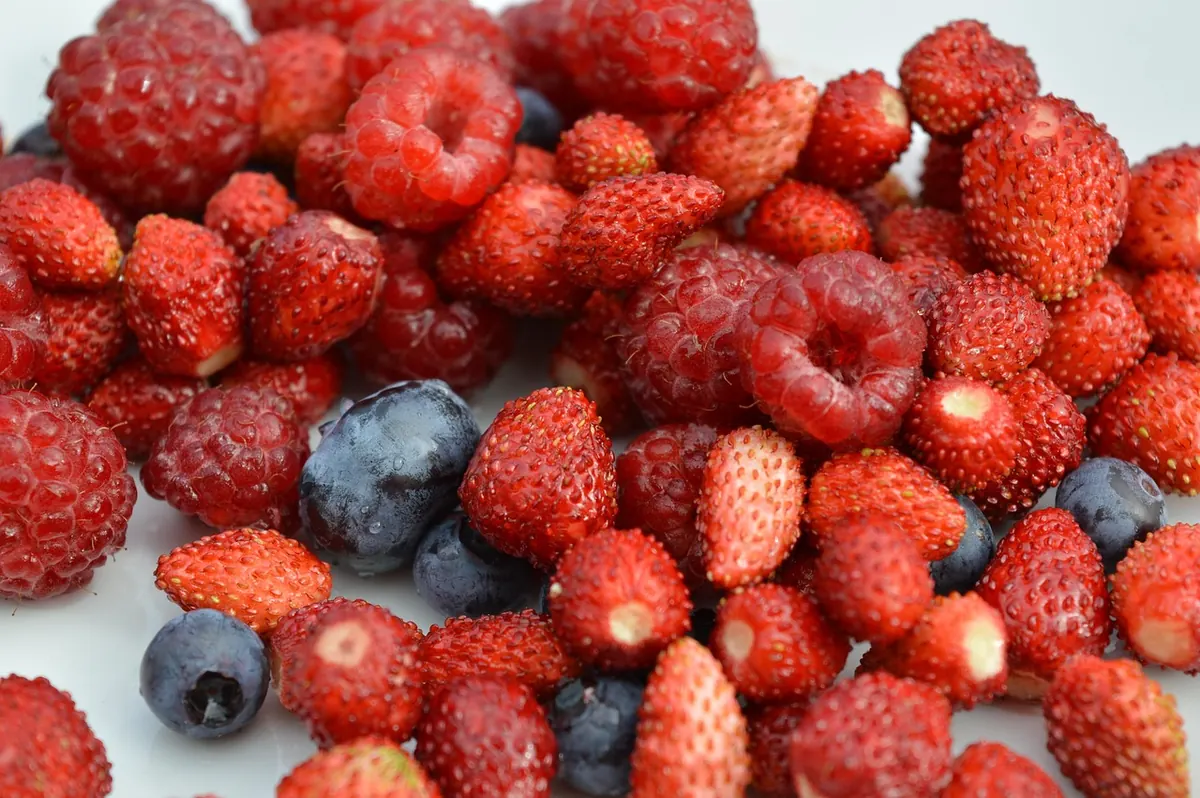
July and August are the glut months. Summer-fruiting raspberries finish as autumn-fruiting varieties begin, blackcurrants and blueberries come thick and fast, and tayberries, loganberries and boysenberries fill the gap in between. Plums and greengages follow in August, with damsons close behind in September. In a warm, sheltered garden, a fig tree may give you a small crop in late summer too.
This is the time to pick early in the morning, while the fruit is still cool, and to refrigerate it unwashed. Washing berries before you store them invites mould; rinse them in a colander only when you are ready to eat.
Autumn: The Orchard and the Hedgerow
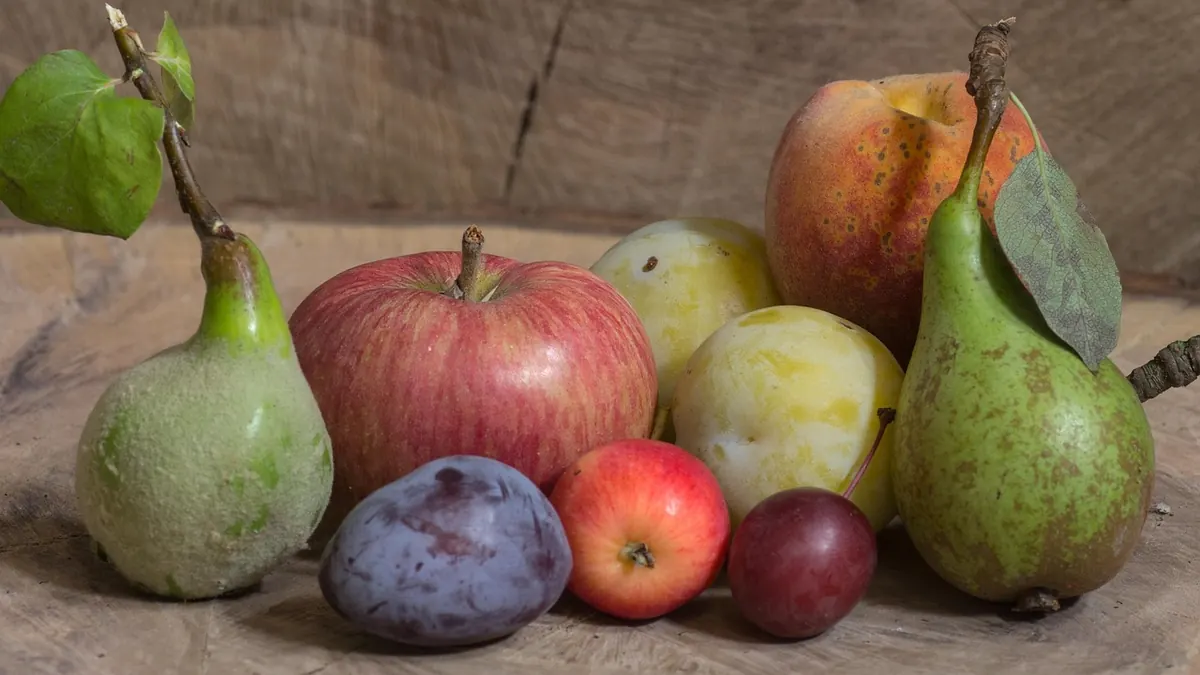
Autumn belongs to apples and pears. Discovery and Katy come first in late August and early September, then Cox's Orange Pippin, Egremont Russet and Bramley through October. Keepers such as Ashmead's Kernel will still be good after Christmas if they are stored properly. Pears need different handling: pick them firm, because they ripen from the inside out, and let them finish on the kitchen counter.
Quince appears in October — rock-hard and astringent raw, but transformed by roasting or a slow-cooked jelly. The hedgerows fill with blackberries from August into October, sloes after the first cold nights, and elderberries in September. Elderberries must be cooked; never eat them raw. Medlars are picked late in the year and left to blet until they turn soft and brown, which is exactly when they are ready.
Winter: Stored Fruit and the Cycle Restarts
By December, the fresh season has narrowed to stored apples and pears, quince, and whatever you froze in September. Then, quietly, the whole thing begins again: forced rhubarb crowns start producing around Christmas, and by January the sheds are lit and the first pink stalks are being pulled.
Judging Ripeness and Making the Season Last
Calendar dates get you close. Your own senses close the gap. A few checks worth using on any fruit:
- Smell it at the stalk. Ripe fruit smells of itself. If there is no scent, it is not ready.
- Feel for a little give. Gentle pressure should yield slightly. Soft and squashy means past it.
- Try the lift-and-twist. Apples and plums should part from the branch with a light turn, stalk attached. If you have to pull hard, wait.
- Look past the blush. The background colour — green turning yellow — tells you more than the red flush on the sunny side.
- Eat one before you pick a punnet. The best test is still your own tongue.
For storage, keep apples away from other produce, as they give off ethylene that speeds up ripening in everything nearby. Freeze soft fruit in a single layer on a tray first, then bag it once it is solid, so the berries stay separate. Pears and medlars are best ripened at room temperature, not in the fridge.
Finally, write things down. Note the date you picked your first strawberry or your best apple each year and you will slowly build a calendar for your own patch, which is more useful than any national average. Buy from growers at farmers' markets and pick-your-own farms, and ask them what is at its peak that week. If you forage, pick only where you have permission, take a fraction of what you find and leave the rest for wildlife, and never eat anything you cannot identify with complete certainty.
Photo: Ben_Kerckx / Pixabay