September 16, 2026
British stone fruit does not hang about. From the first Kentish cherries in June to the last dusky damsons in October, the whole season fits inside a few months, and most of it tastes better than anything flown in from further south. The catch is timing. Buy too early and you get fruit that never ripens properly; leave it a week too long and the wasps get there first. Here is what to look for, month by month, and how to tell when each fruit is genuinely ready.
A short season, and why it matters
Stone fruit — cherries, plums, apricots, peaches and nectarines — all share the same structure: soft flesh wrapped around a hard stone, with a skin that holds most of the aroma. That structure governs how they ripen. Once picked, they soften, sweeten and smell better, but they will not gain any more sugar. Whatever sweetness is in the fruit at harvest is the sweetness you end up with.
That single fact shapes everything else. A peach picked hard and green in a warm country, then shipped for a week, will soften on your worktop but stay bland. A British-grown peach picked close to ripe and eaten within days tastes like something else entirely. So the aim, whether you are buying from a farm shop or a market stall, is fruit that was picked late — not fruit that will "finish ripening" on the windowsill.
The UK stone fruit calendar
Cherries: June to early August
Kent, Herefordshire and parts of Essex still grow proper cherries, and the season starts in early June with the earliest varieties and runs into August for the later, darker ones. Rain is the enemy: a wet spell just before harvest splits the fruit, which is why cherry crops swing so wildly from year to year.
Look for fruit with green or light-brown stems, glossy unbroken skin and a deep colour that runs right through to the stalk end. Pale shoulders and shrivelled stems mean old fruit, not unripe fruit. Taste one before committing to a punnet — a good cherry is firm, springy and sweet, never spongy.
Apricots: late June to August
Genuinely British apricots are a small crop, grown mostly in sheltered corners of the south and under polytunnels, and they arrive around late June and July. Most apricots sold here come from France, Spain, Italy and Turkey, where the season runs a little earlier. Either way, the ripeness test is the same.
An apricot should be a rich orange with a blush, never with a green tinge around the stem, and it should smell sweet at the stalk end before it feels soft. Press gently near the stem: it should give just slightly. Rock-hard apricots tend to stay disappointing, and ones with dull, wrinkled skin are past it.
Peaches and nectarines: July to September
British peaches are a genuine treat when you find them, usually from July into September and often grown under cover. Nectarines are the same fruit without the fuzz, and they ripen in the same window.
Ignore the red blush — it is a variety trait, not a ripeness signal. What matters is the background colour, which shifts from green to creamy yellow or gold. The fruit should feel heavy for its size and yield a little at the shoulders when you cup it in your palm. A ripe peach smells of peach from a foot away.
Plums and damsons: late July to October
This is the most generous part of the British season. Early plums arrive in late July, Victoria plums take over in August, and the later varieties — Marjorie's Seedling, damsons and bullaces — carry on into September and October.
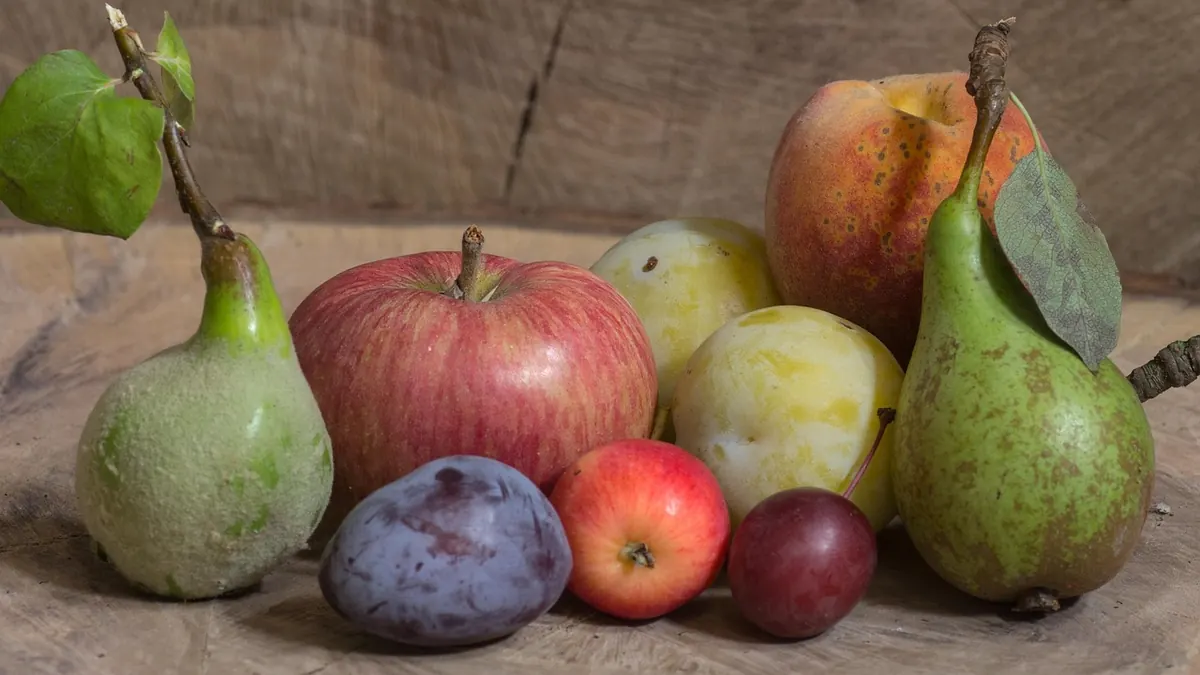
A ripe plum has a slight give at the blossom end, the dimple opposite the stem, and often wears a dusty white bloom on the skin. That bloom is natural and worth having; it protects the fruit. Avoid plums that are hard as marbles all over, or leaking at the stem end.
How to judge ripeness in the shop
You cannot squeeze everything on the stall, so work through this in order:
- Smell it. Aroma at the stem end is the most reliable signal, and it works for every stone fruit.
- Look at the background colour, not the blush. Green shoulders mean unripe.
- Check the weight. Heavy fruit is juicy fruit.
- Press once, gently, near the stem or at the blossom end. Slight give is what you want.
- Ask when it was picked. Stallholders usually know, and it tells you how long you have got.
Ripening at home — and when not to bother
If the fruit is firm but has good colour and smell, leave it on the worktop at room temperature. A paper bag or a fruit bowl near a banana speeds things up, because both release ethylene, the gas that triggers ripening. Check daily; stone fruit moves from perfect to overripe quickly.
If the fruit is green, hard and scentless, no amount of patience will fix the flavour. Cook with it instead: poach it in syrup with a strip of lemon peel, or roast it with a little sugar, where texture matters less than juice.
Once ripe, move fruit to the fridge to hold it for a day or two — but bring it back to room temperature before eating, because cold mutes the aroma. Never refrigerate unripe stone fruit. The cold damages the flesh and leaves it mealy, even after it eventually softens.
Buying well this season
Buy little and often. Stone fruit does not improve in storage the way apples do, so a big bag of plums on Monday is a bowl of mush by Friday. Buy what you will eat in three or four days, keep it out of the fridge until it is ready, and buy again. That is the whole trick — and it is the reason the British season feels so short. You are eating it at its best, not hoarding it.
Photo: akirEVarga / Pixabay